Beyond layout and furnishing, interior architecture engages with the very substance of a place. It doesn't dress existing rooms: it orchestrates the empty space, shapes the volumes and captures the light to create living places that stir a lasting emotion.
1. Volumetry: Playing with mass and void
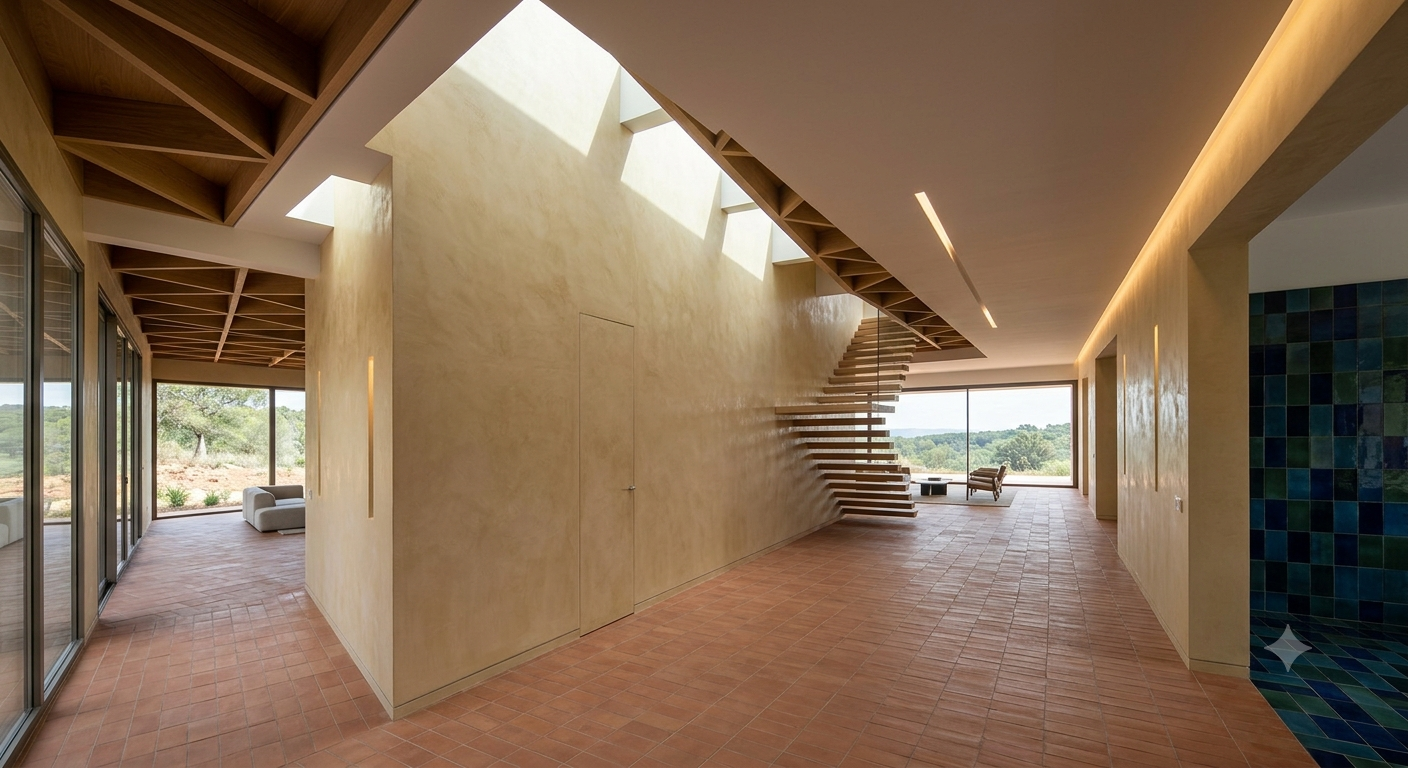
Every architecture project begins with a three-dimensional reading of the space. Even before considering the slightest colour, the challenge is to define the right proportions.
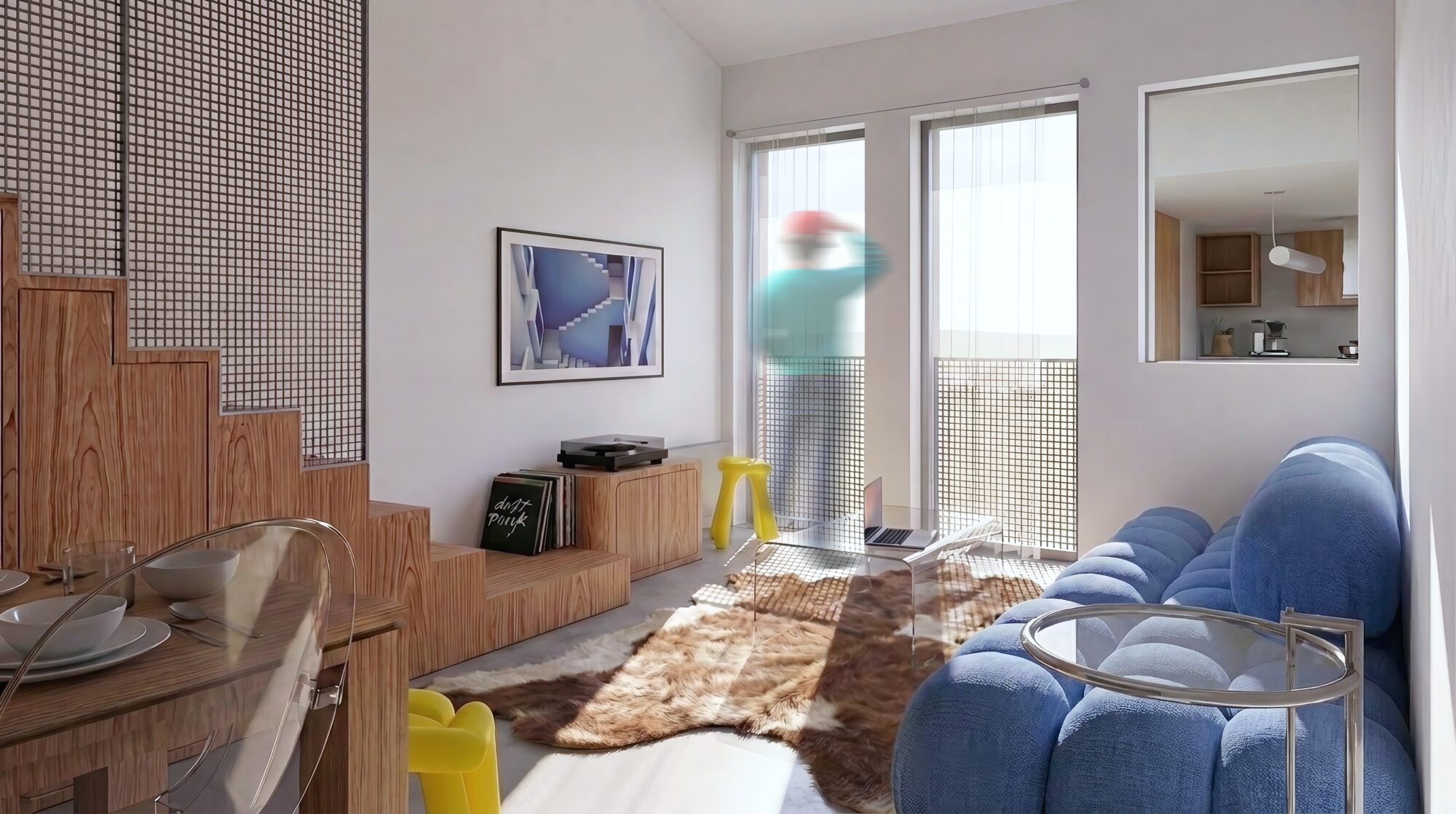
Verticality and ceiling height: enhancing volumes with full-height vertical elements (full-height doors without transoms, integrated joinery, geometric screens) that draw the eye upward.
Working with the void: knowing how to preserve pockets of air and breathing room. In high-end contemporary architecture, the void isn't a lack but a compositional element in its own right that showcases the key pieces.
Perspectives and alignments: creating visual enfilades and clear vanishing lines that run through the apartment or house from end to end.
2. Light as a building material
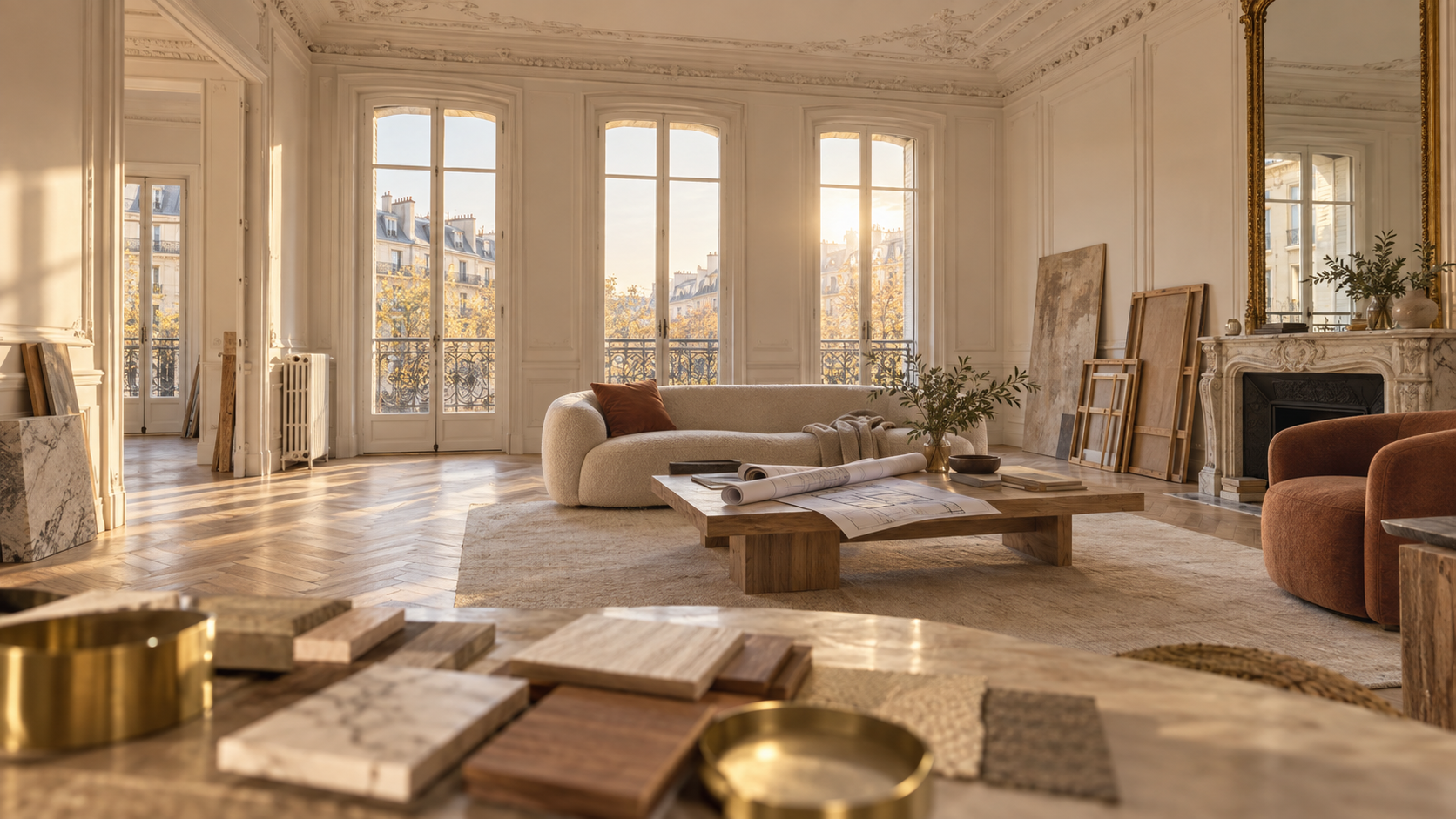
Light isn't just a functional input; it's the architect's most alive material. It reveals textures, transforms hues over the course of the day and sets its rhythm.
Capturing daylight: rethinking openings, using bespoke architectural glazing or textured glass to diffuse soft light into blind areas.
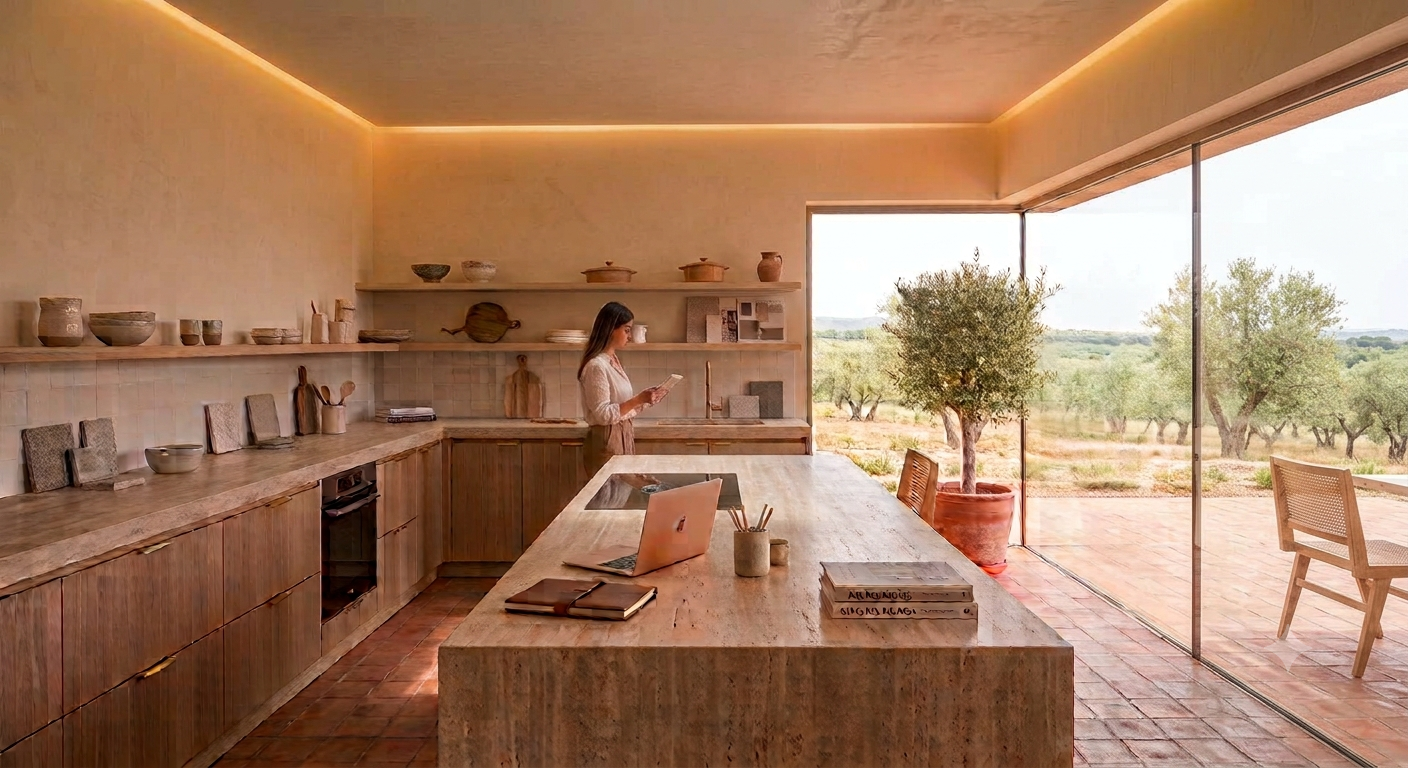
Night-time architectural lighting: banishing the single central light fixture in favour of invisible lighting design. Integrating light coves, recessed slots and low-glare spotlights allows forms to be sculpted from dusk onward.
3. The truth of material: In praise of the raw and the noble
Contemporary architecture moves away from artifice to celebrate the nobility of textured, enduring materials.
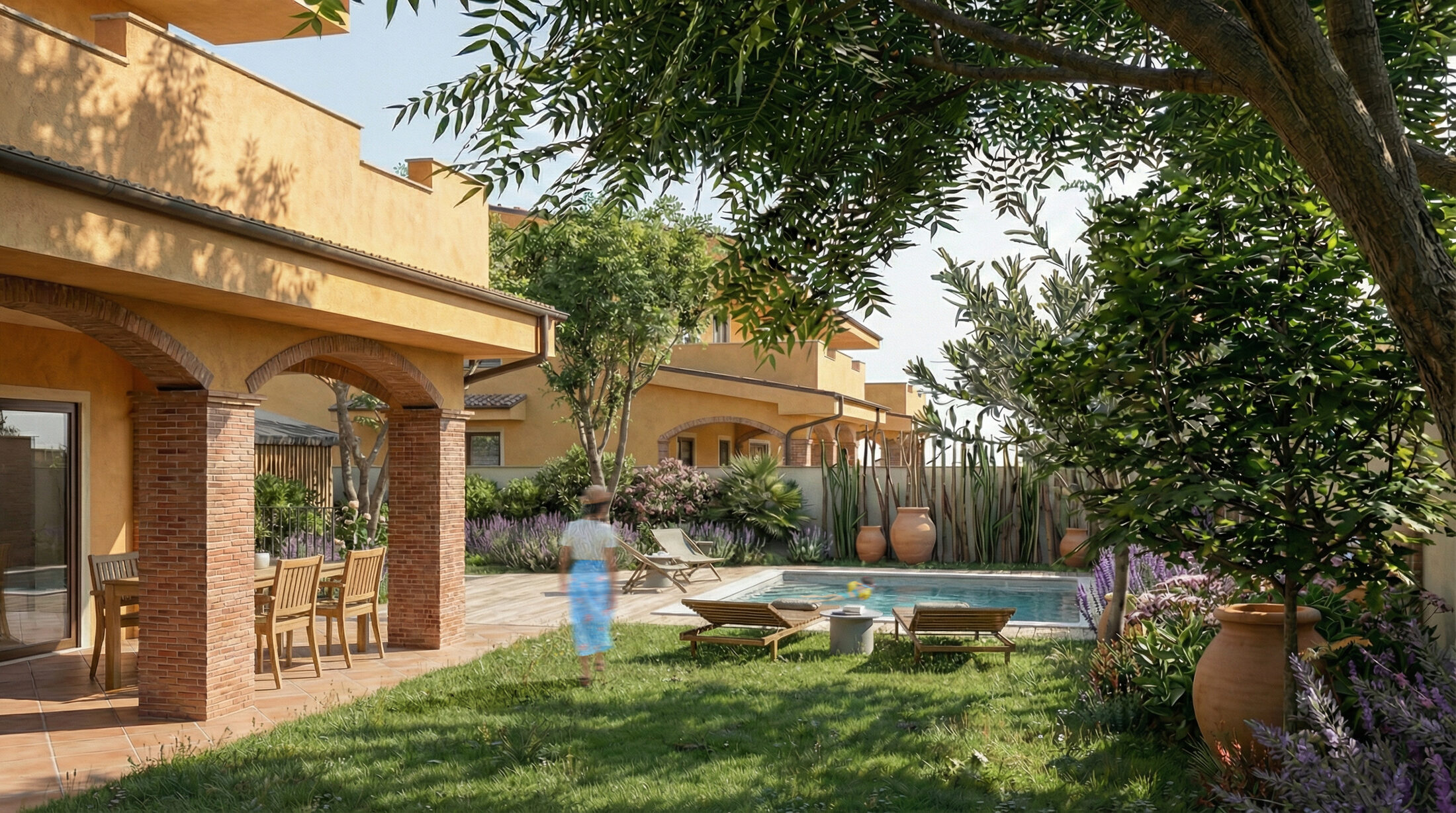
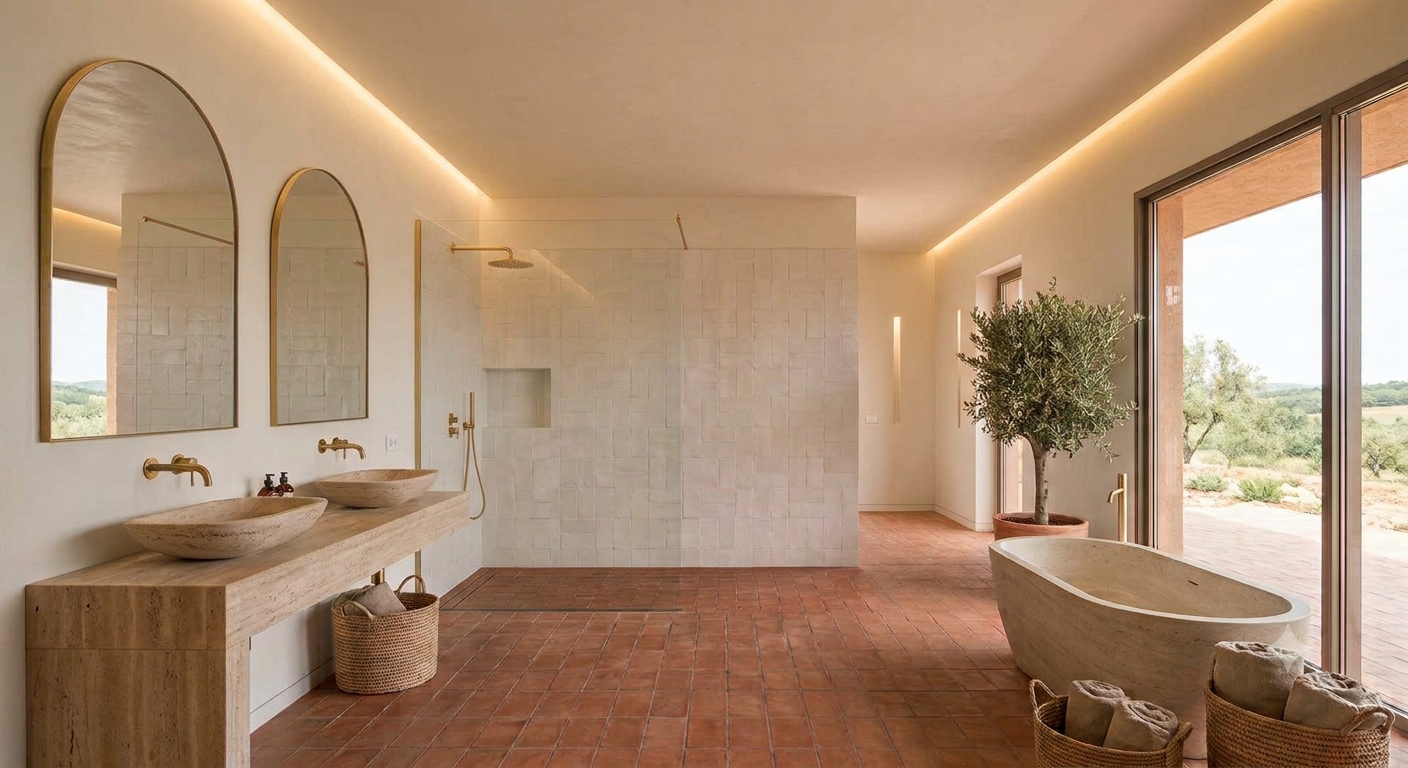
The pairing of mineral surfaces (honed natural stone, architectural concrete, lime or clay renders) with warm touches (solid wood, patinated brass, raw linen textiles) creates an elegant visual tension. This contrast brings the interior a tactile presence and a patina that grows more beautiful with time.
4. The invisible integration of technical detail
What sets a rigorous architectural approach apart from a simple fit-out is the care given to the detail of execution:
Flush skirting boards: integrated flush with the wall for an absolute purity of line.
Pocket doors and invisible frames: with no visible casing (Filomuro-type system), allowing partitions to present themselves as pure planes of mass.
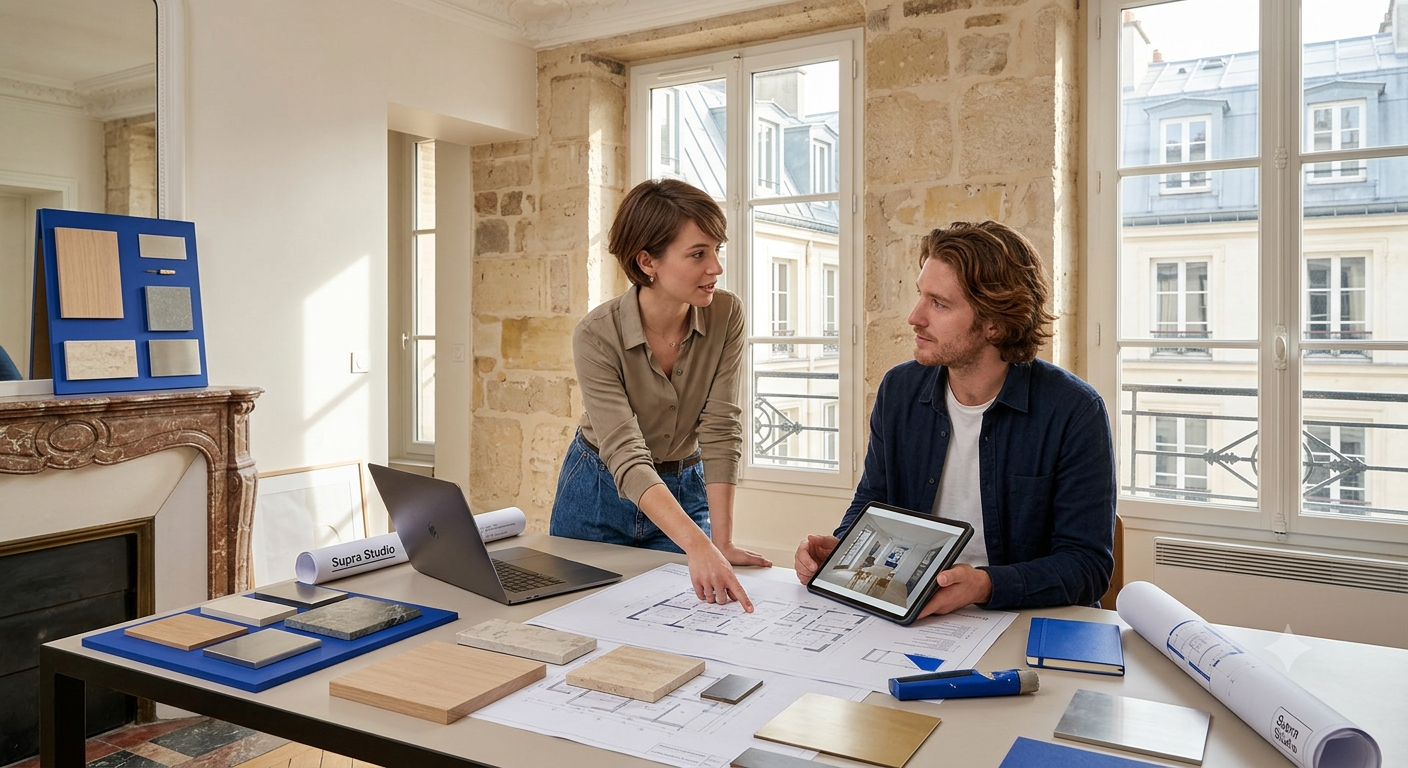
Millimetre-precise setting-out: the perfect alignment of tile joints, stone slabs and wood patterns for flawless geometric harmony.
Bringing your space into dialogue with architecture, with the Studio
Our studio approaches every project with the rigour of the architect and the sensibility of the designer, to build bespoke spaces where every detail finds its justification.
Have a vision for your space? Book an appointment to discuss it, or get in touch to tell us about your project.