A Haussmann-era apartment has many qualities: generous volumes, light, thick walls, mouldings, a parquet floor that has lasted a century. Very often, it also has a poor energy performance rating. With rental bans drawing closer, subsidies that keep changing and constraints specific to Paris, the same question comes up in almost all of our first meetings: what needs to be done, in what order, and how can comfort be improved without damaging what gives the place its character? Here is how we approach the energy renovation of an older apartment, through an architect's eyes.
Why the subject can no longer be ignored
The regulatory timetable is now clear. Homes rated G on the energy performance certificate (DPE, or EPC) have not been lettable since 1 January 2025: they are considered unfit for habitation. Homes rated F follow on 1 January 2028, then homes rated E on 1 January 2034. A lease signed before these dates is not affected immediately, but the ban applies when the contract is renewed or tacitly extended.
This deadline concerns landlords first. But it also weighs on owner-occupiers, because a poor rating eventually shows up at the time of sale, and above all in daily life: cold walls in winter, overheating in summer, draughts, high bills.
A useful point: the way the certificate is calculated has changed. Since 1 January 2026, the coefficient that converts electricity into primary energy has dropped from 2.3 to 1.9. Some electrically heated homes, particularly small ones, may therefore have moved up a class without any work at all. This does not replace a genuine improvement in comfort, and says nothing about the real condition of the building envelope. That is why we always reason from the building and how it is used, not only from the label.
Understanding how a Paris apartment loses heat
Before choosing works, you need to understand where the heat escapes. In an older Parisian building, the losses are distributed differently from those of a detached house.
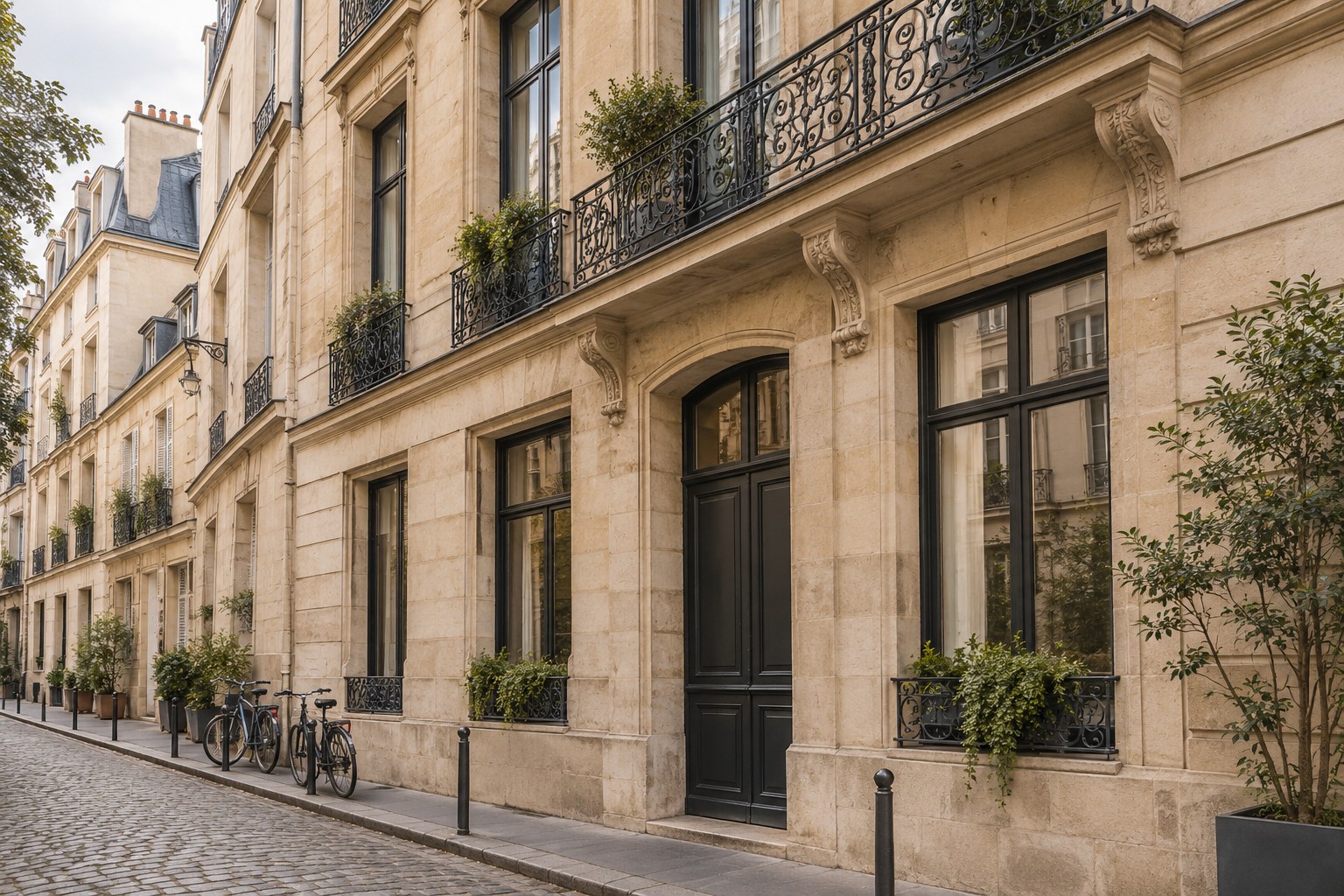
Façade walls, in ashlar stone or rubble, are thick and have high thermal inertia. They are not as bad as people think, and they play a valuable role in summer comfort. Party walls and partitions facing common areas, often forgotten, also count.
Windows are frequently the first weak point: old timber frames, tired seals, single glazing. This is generally where the gain is quickest and most visible.
Floors and ceilings, when the apartment sits above an unheated floor, a cellar or a passageway, or beneath the attic, can account for a significant share of heat loss. Finally, ventilation is a subject in its own right: a home that is too airtight without controlled air renewal develops damp and mould, while a home that is too porous wastes its energy.
An order of priorities, rather than a list of measures
The temptation is to treat works one by one: change the windows this year, the boiler next year. This is rarely the best approach. A single isolated measure can unbalance the home: very airtight new windows without suitable ventilation, for example, create condensation.
We prefer to proceed in four stages. First, a precise diagnosis of the building and how it is used: orientation, floor, condition of the walls, heating system, lifestyle. Then the definition of a coherent scenario, which ranks interventions by effectiveness and compatibility with the existing fabric. Next, a phasing of the works, possibly spread over time, to take account of the budget and the co-ownership calendar. Finally, close site supervision, because the quality of execution is what delivers the performance: a poorly treated thermal bridge cancels out a good part of the expected gains.
Insulating walls without damaging them
In a stone building, external insulation is almost ruled out: it would alter the façade and in any case requires the approval of the co-ownership and of the authorities. That leaves internal insulation, which costs living space (a few centimetres lost on each wall concerned) and demands rigour.
The main point of attention is moisture management. Old walls work by exchanging water vapour with the indoor and outdoor air. Covering them with an unsuitable waterproof insulation and vapour barrier can trap moisture and degrade the wall over time. We therefore favour so-called breathable materials, compatible with this behaviour: wood fibre, lime-hemp, cork or insulating lime renders. They are often a little more expensive, but far better suited to stone.
We insulate the most exposed walls first: north-facing façades, gable walls, walls facing the outside or unheated common areas. It is not always necessary to treat everything: a good project targets the walls where the gain is clearest, and preserves mouldings and fireplaces where they deserve to be kept.
Windows: keep, improve or replace
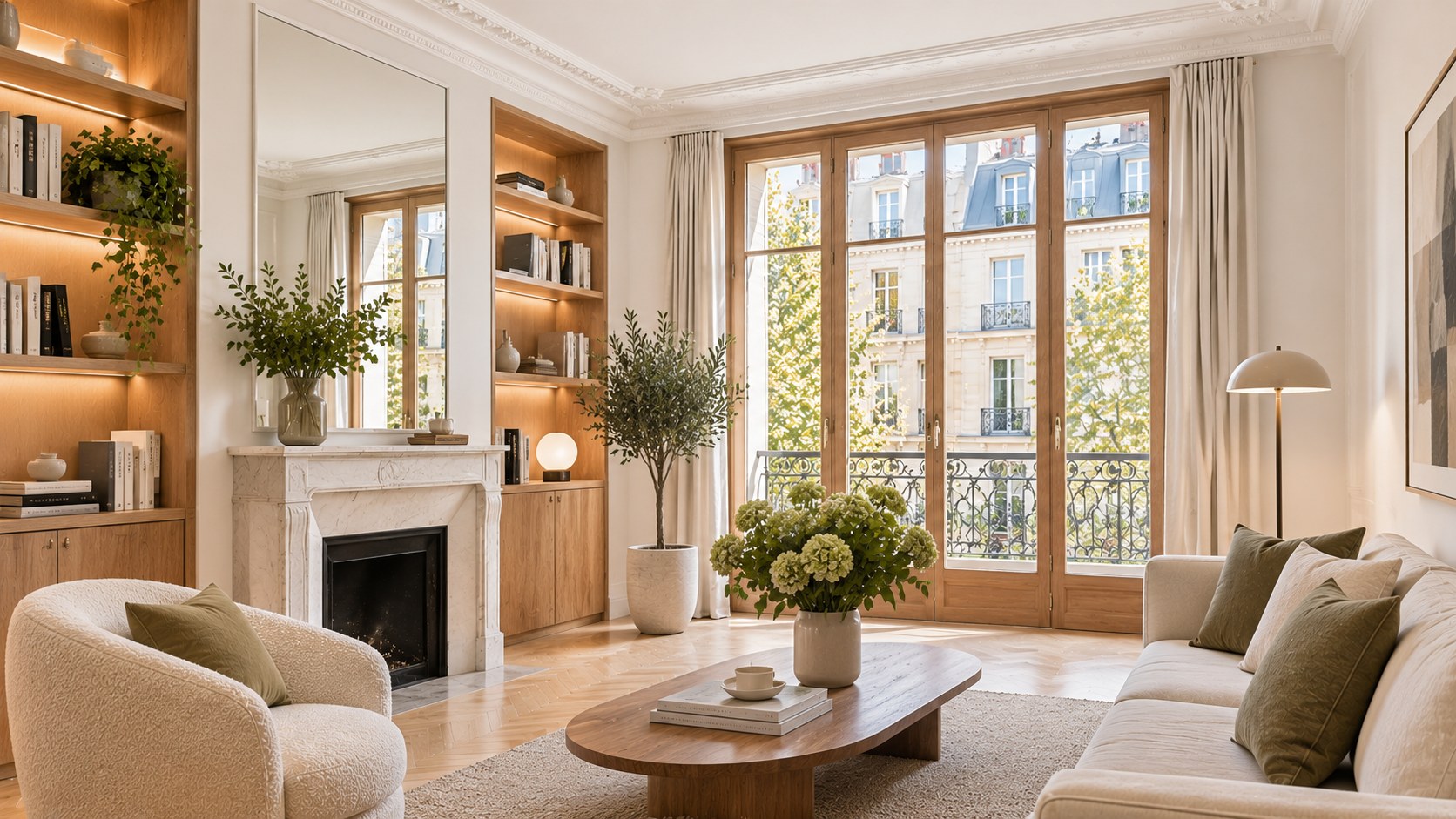
French-style timber windows, with their glazing bars and slender profiles, are part of the identity of an older building. Before replacing them, ask whether they can be restored: reworking the seals, restoring the timber, fitting slim insulating glazing into the existing frame, or even adding a second interior window, which also brings a very good acoustic gain. These solutions are often cheaper than a full replacement, and more respectful of the façade.
When replacement is necessary, fidelity to the original model is essential: proportions, section of the profiles, colour, material. In Paris, this is not only a matter of aesthetics. Windows change the outward appearance of the building: they generally require a prior declaration of works, and in a protected area or near a listed monument, the Architecte des Bâtiments de France may impose precise requirements, or even oppose certain materials. We detail these procedures in our article on the prior declaration of works in Paris.
Ventilation and summer comfort: the two forgotten ones
People talk a great deal about winter, far less about summer. Yet episodes of intense heat are increasingly frequent in Paris, and apartments under the roof or facing due south are the first affected. The solutions are often simple and inexpensive: external solar protection (shutters, blinds, subject to co-ownership and City rules), night ventilation, materials with good thermal inertia, light colours on roofs or façades where possible.
Ventilation deserves just as much attention. When a home's airtightness is improved, you must make sure that sufficient air renewal is maintained: air inlets in the window frames, extraction in wet rooms, and in some cases suitable mechanical ventilation. This is design work, which must be thought through together with the rest of the project.
Heating: last, or almost
It may seem odd to deal with heating last. Yet it is logical: once the envelope is improved, needs fall, and the system can be sized better, often smaller. In Paris, many buildings have collective heating, sometimes connected to the urban heat network. Individual choice is then limited, and decisions go through the co-ownership. In apartments with individual heating, the choice is between electricity, gas and a heat pump, with a constraint specific to the capital: installing an outdoor unit is strictly regulated, by the co-ownership rules as well as by planning rules.
Co-ownership and authorisations: the real timetable
This is often what surprises owners most. In a co-owned building, everything that touches common parts or the outward appearance depends on the general meeting: insulating façades or the roof, replacing windows when this changes the appearance of the building, installing equipment on the façade. The decision must be placed on the meeting's agenda, which means planning several months ahead.
On top of this, when they alter the outward appearance, comes the planning authorisation, with the possible opinion of the Architecte des Bâtiments de France. Our advice is to plan this administrative phase very early, in parallel with the design, so as not to lose time when the works begin.
Financial support: to check at the time of your project
Several schemes can support an energy renovation. MaPrimeRénov' for a major renovation is intended for owner-occupiers and landlords of homes more than fifteen years old, with precise conditions: a gain of at least two energy classes, at least two insulation measures, works carried out by RGE-certified contractors, and compulsory support from a France Rénov' adviser and then from a dedicated companion. For the common parts of a building, there is a specific co-ownership scheme, filed by the managing agent. The zero-rate eco-loan and the reduced VAT rate can be combined under conditions.
These schemes, their amounts and their conditions change regularly. Before any commitment, check the up-to-date situation with France Rénov', and do not sign any quote before you have obtained your funding agreement when the subsidy requires it.
Our support
At Supra Studio, we approach energy renovation as a component of the architectural project, not as a list of technical works added afterwards. In practice, we begin with a site visit to understand the building, its orientation, the co-ownership constraints and how you live. We then build a scenario that combines thermal comfort, quality of space and respect for heritage: insulation integrated into the layout, windows restored or replaced with the right design, solar protection designed together with the aesthetics of the place.
We prepare the plans and documents needed for the procedures, help you present the file to the co-ownership, coordinate the contractors and follow the works through to handover. The goal is an apartment that is more comfortable, more economical in energy, and that keeps what gives it its character.
Are you considering energy-improvement works in an older apartment? Book an appointment for an advisory visit, or contact us to discuss it. To place these works within an overall budget, our article on the cost of renovating an apartment in Paris will give you benchmarks.
The information in this article is indicative and reflects the rules in force at the date of publication. Each project must be checked according to the situation of the building, the co-ownership regulations and the planning rules of the City of Paris.
Frequently asked questions
From when can a home rated F or G no longer be let? Homes rated G are unfit for habitation and can no longer be let from 1 January 2025 (for contracts signed, renewed or tacitly extended from that date). Homes rated F follow on 1 January 2028, then homes rated E on 1 January 2034.
Which works should come first in an older apartment? There is no single answer, but the logical order is to deal first with the envelope (windows, airtightness, the most heat-losing walls), check the ventilation, then adapt the heating. A precise diagnosis of the building makes it possible to rank the works by effectiveness.
Can a Haussmann apartment be insulated from the outside? In practice, very rarely: it would alter the façade, requires the approval of the co-ownership and the authorities, and is often incompatible with the character of the building. Internal insulation, with materials compatible with old walls, is the most common solution.
Is authorisation needed to change windows in Paris? Yes, in most cases, because replacement changes the outward appearance of the building: a prior declaration of works is generally required, and the agreement of the co-ownership may be too. In a protected area or near a listed monument, the Architecte des Bâtiments de France may impose the model, material and colour.
Do you need an architect for an energy renovation? It is not compulsory for a limited project, but it is very useful as soon as several works are combined, when the building is old or protected, or when the renovation is part of a wider project. The architect coordinates technical choices, prepares the authorisation files and ensures that energy gains do not come at the expense of space or the character of the place.
Are financial subsidies still available? The schemes change regularly. Always check their up-to-date conditions on the France Rénov' website before starting the works, and wait for the funding agreement when it is required.