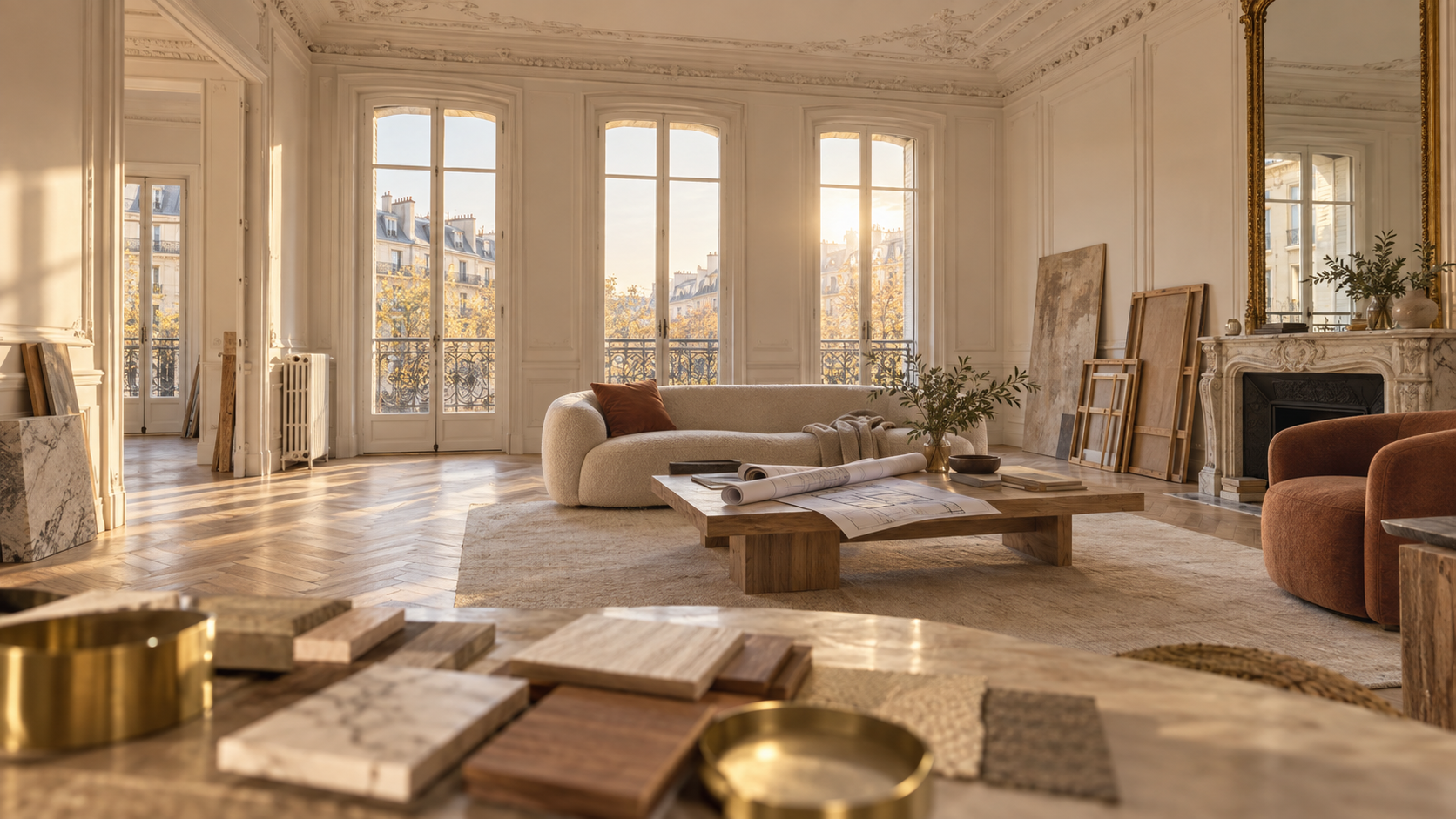
Herringbone parquet, sculpted mouldings, marble fireplaces and generous ceiling heights: the charm of period buildings remains a safe bet. How do you enhance this architectural heritage while adapting it to contemporary living?
Enhancing history without freezing it in place
Renovating a Haussmannian or period apartment requires a delicate balance. The goal is neither to turn the place into a nostalgic museum, nor to erase its history with cold minimalism. The challenge is to make the classical vocabulary dialogue with bespoke, clean and functional architectural lines.
1. Restoring and showcasing the original features
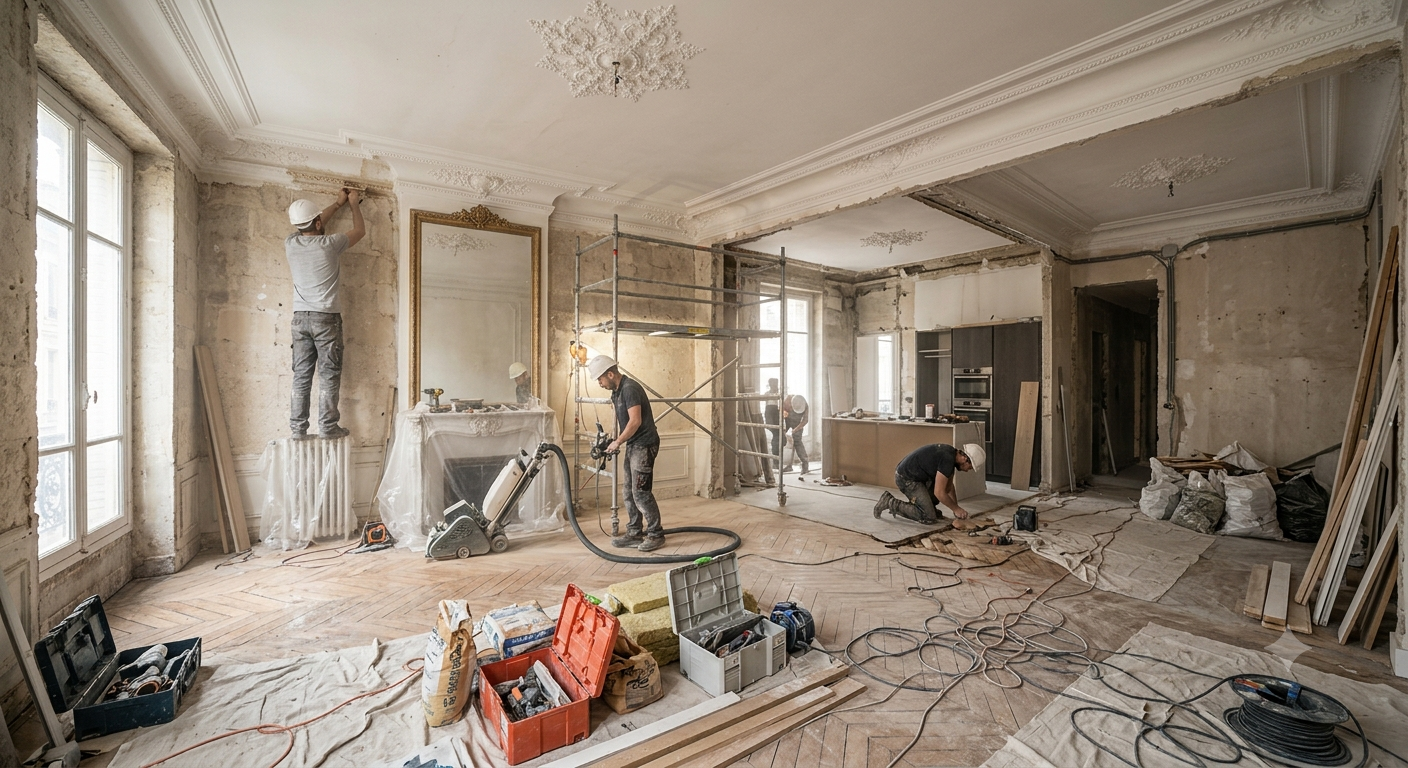
Before introducing contemporary elements, the first step of a successful renovation project lies in preserving what already exists:
The period parquet floors: preservation, sanding back to bare wood and protection with matte oils or invisible varnishes to restore the original patina.
Mouldings and plasterwork: artisanal repair of plaster ornamentation damaged by time or former partitions.
Fireplaces and gilded mirrors: marble restoration and integration as centrepieces within the new scenography.
2. Redefining the volumes for today's way of living
19th-century apartments were designed with a highly compartmentalised layout (a suite of interconnecting rooms, isolated service areas). Contemporary renovation aims to reintroduce fluidity and clarity.
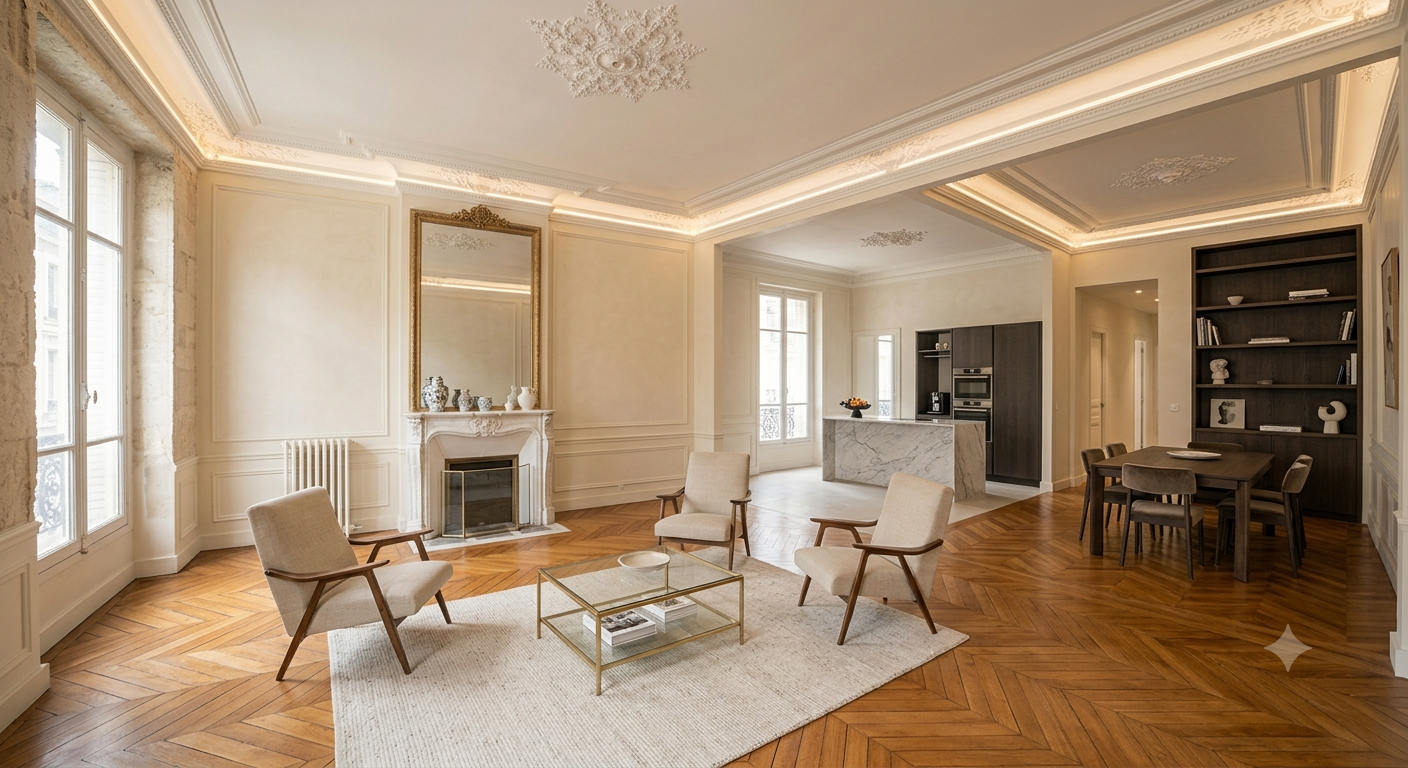
Opening up large living spaces (living room/kitchen) is achieved by removing non-load-bearing partitions or creating openings under steel beams. To preserve the memory of the original rooms, ceiling mouldings that subtly mark the former boundaries are kept.
3. Bespoke joinery as a bridge between eras
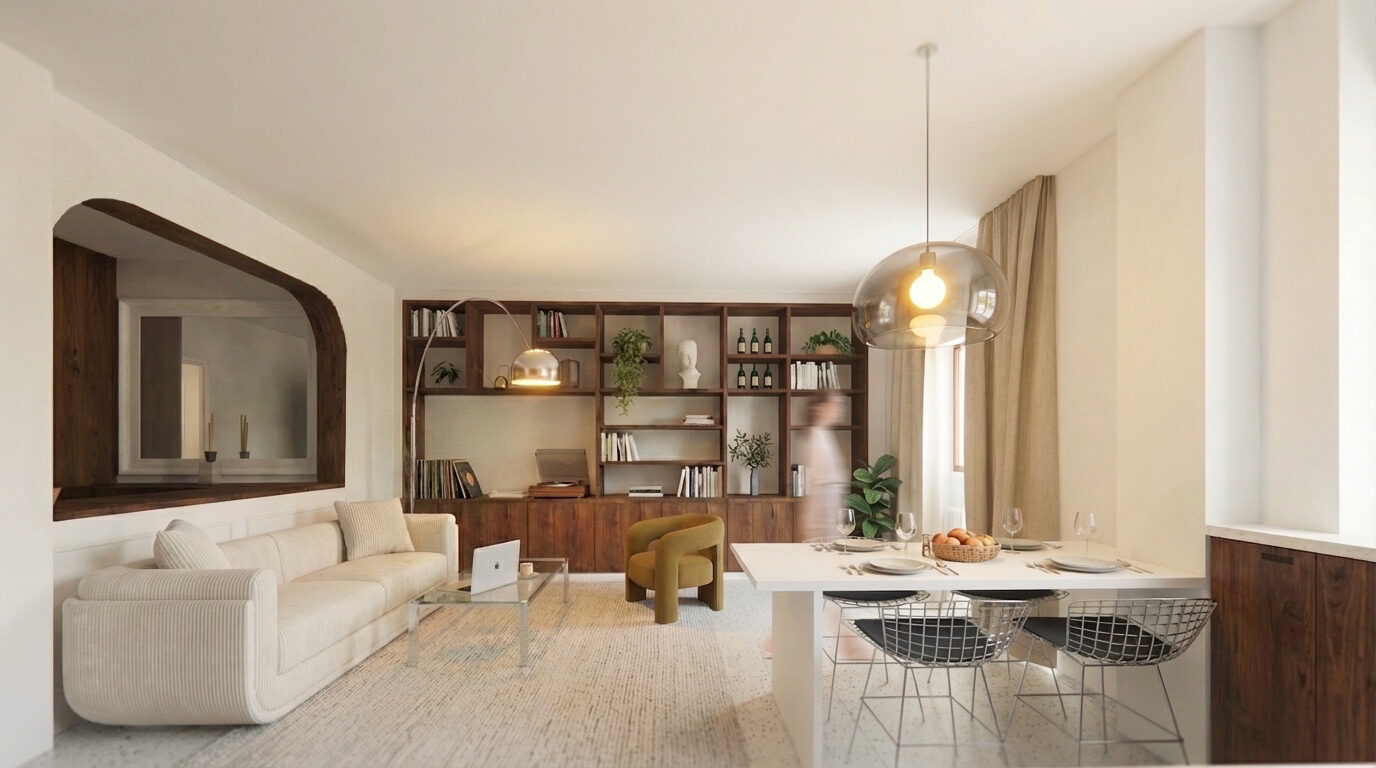
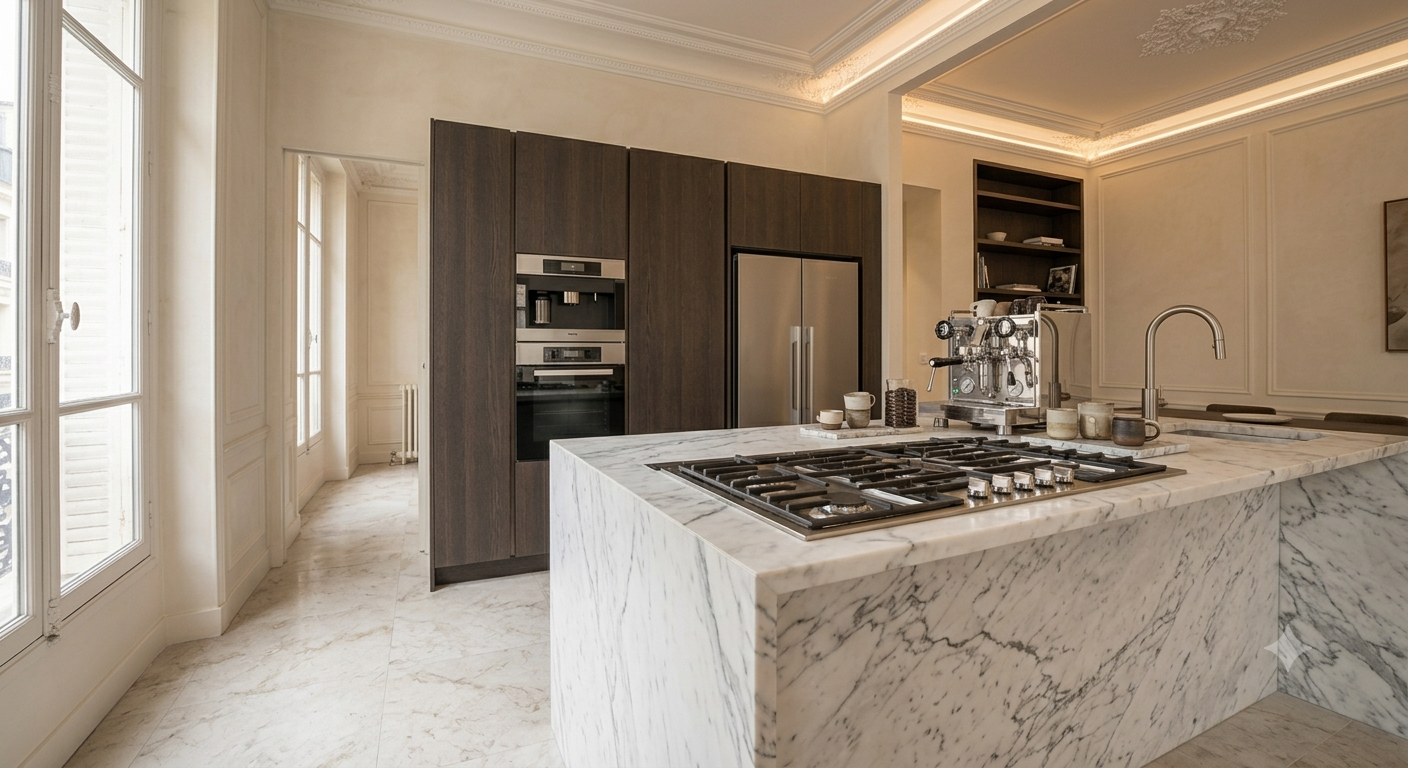
Inserting bespoke, cleanly designed fittings (built-in bookcases, full-height dressing rooms, mineral kitchen islands) offers a striking, elegant contrast with the classical envelope.
By designing furniture that aligns perfectly with the wainscoting or stops just short of the mouldings without ever crowding them, a harmonious dialogue is created between today's cabinetmaking craft and the artisanship of the past.
4. Discreetly modernising technical comfort
One of the greatest challenges of interior architecture in period buildings concerns integrating modern equipment without altering the aesthetic:
Recessed routing of electrical and plumbing networks.
Integration of invisible air conditioning or ducted ventilation networks within partial false ceilings.
Lighting design combining indirect ambient lighting (light coves) and discreet adjustable spotlights to showcase the ceiling heights.
Your renovation project with our Studio
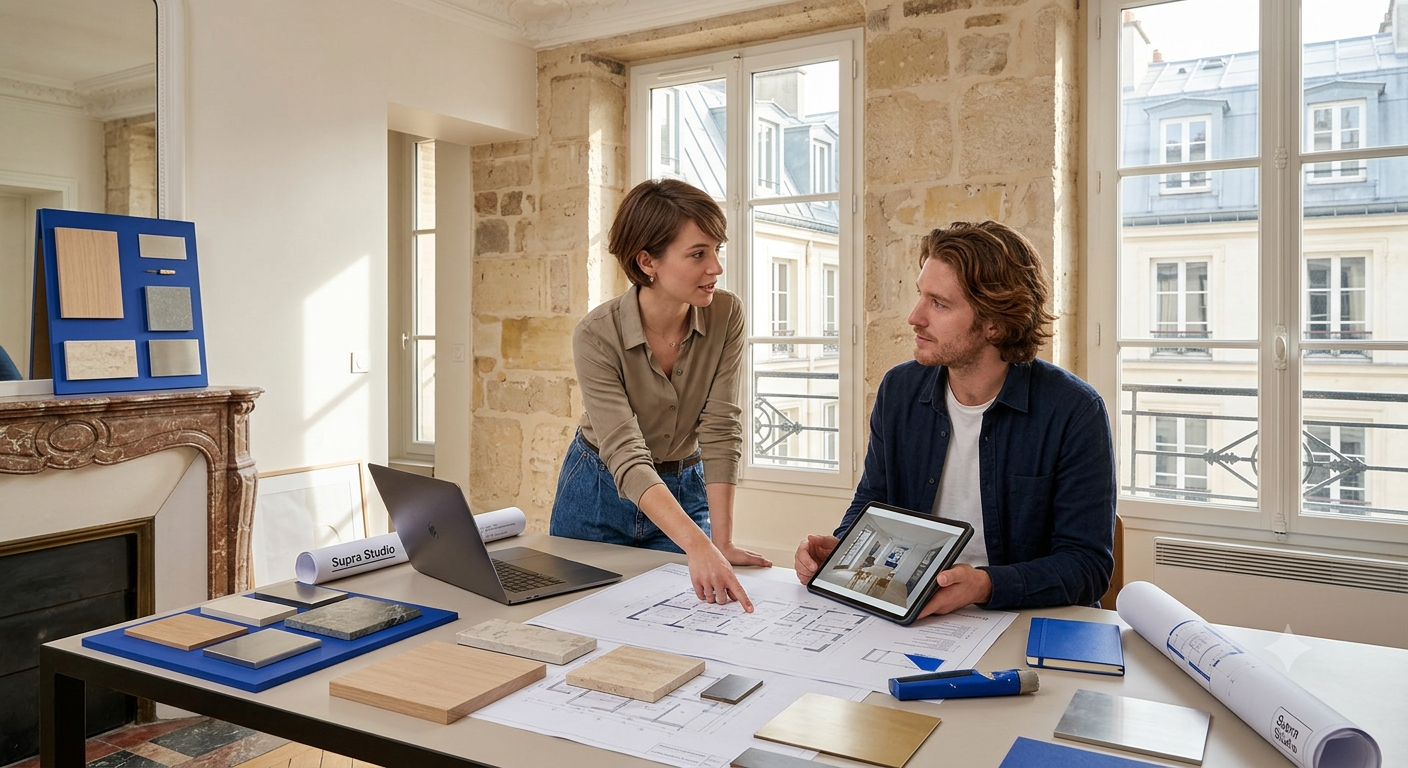
Our interior architecture studio supports discerning owners in the complete restructuring and enhancement of exceptional apartments.
Looking to renovate a period or Haussmannian apartment? Book an appointment for a first consultation visit, or get in touch to discuss it.