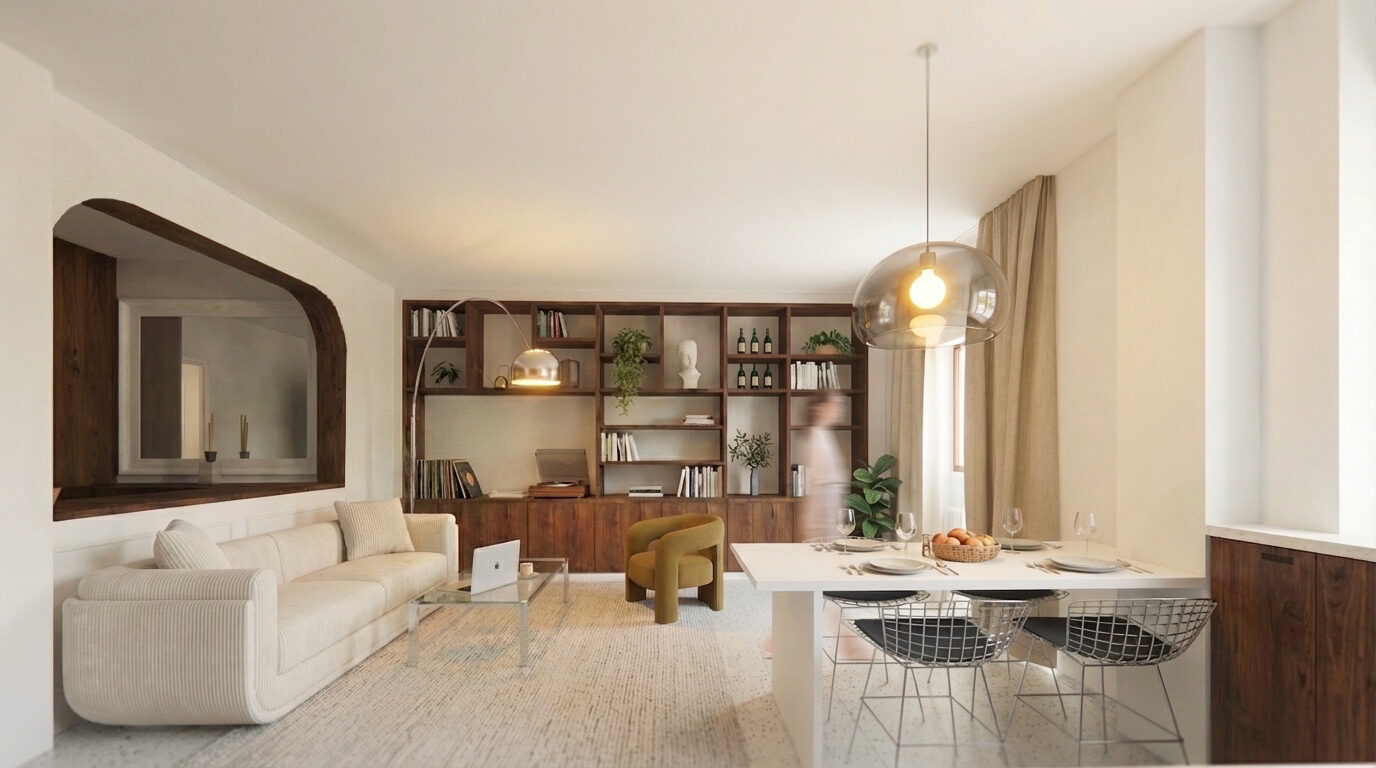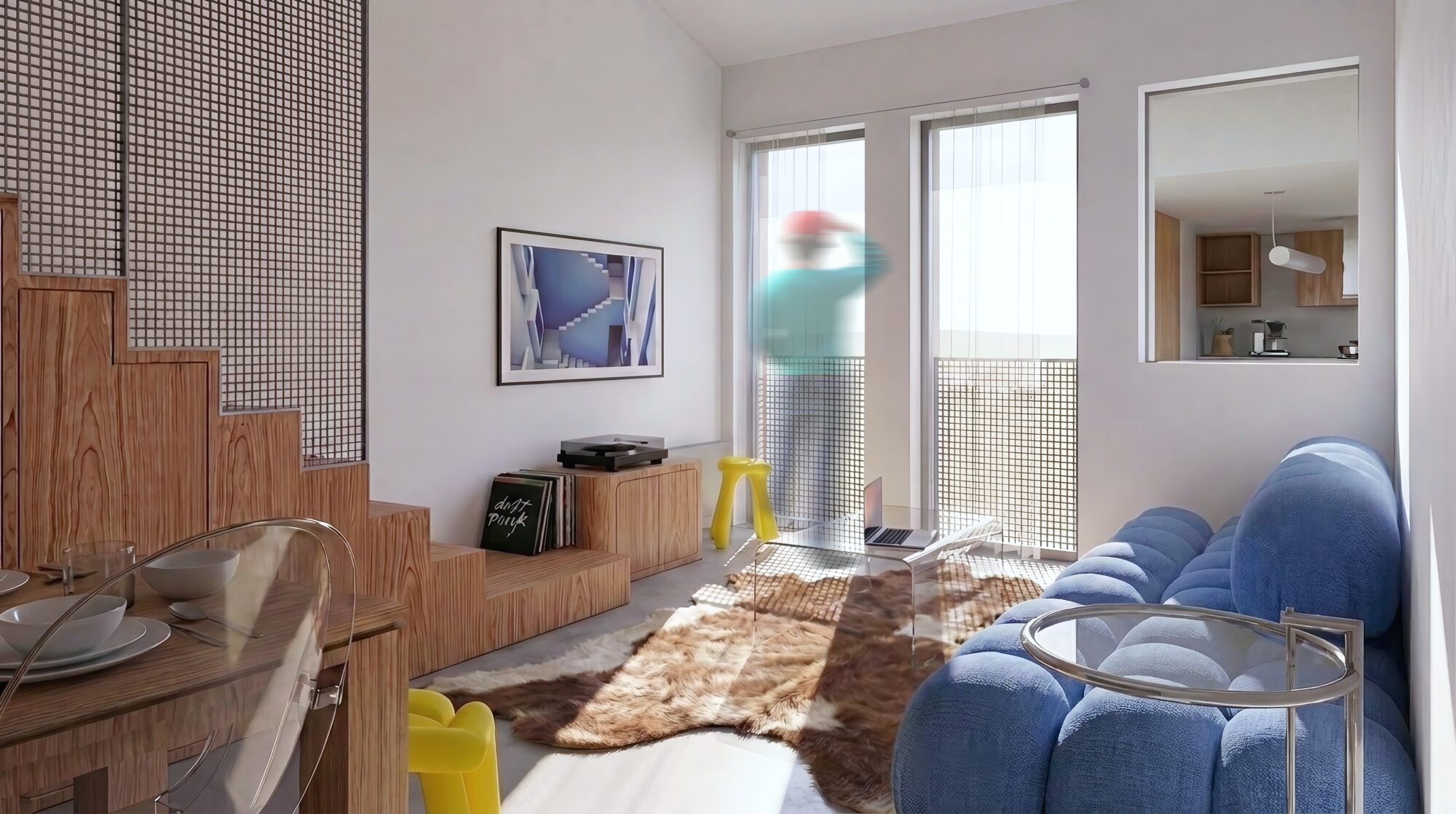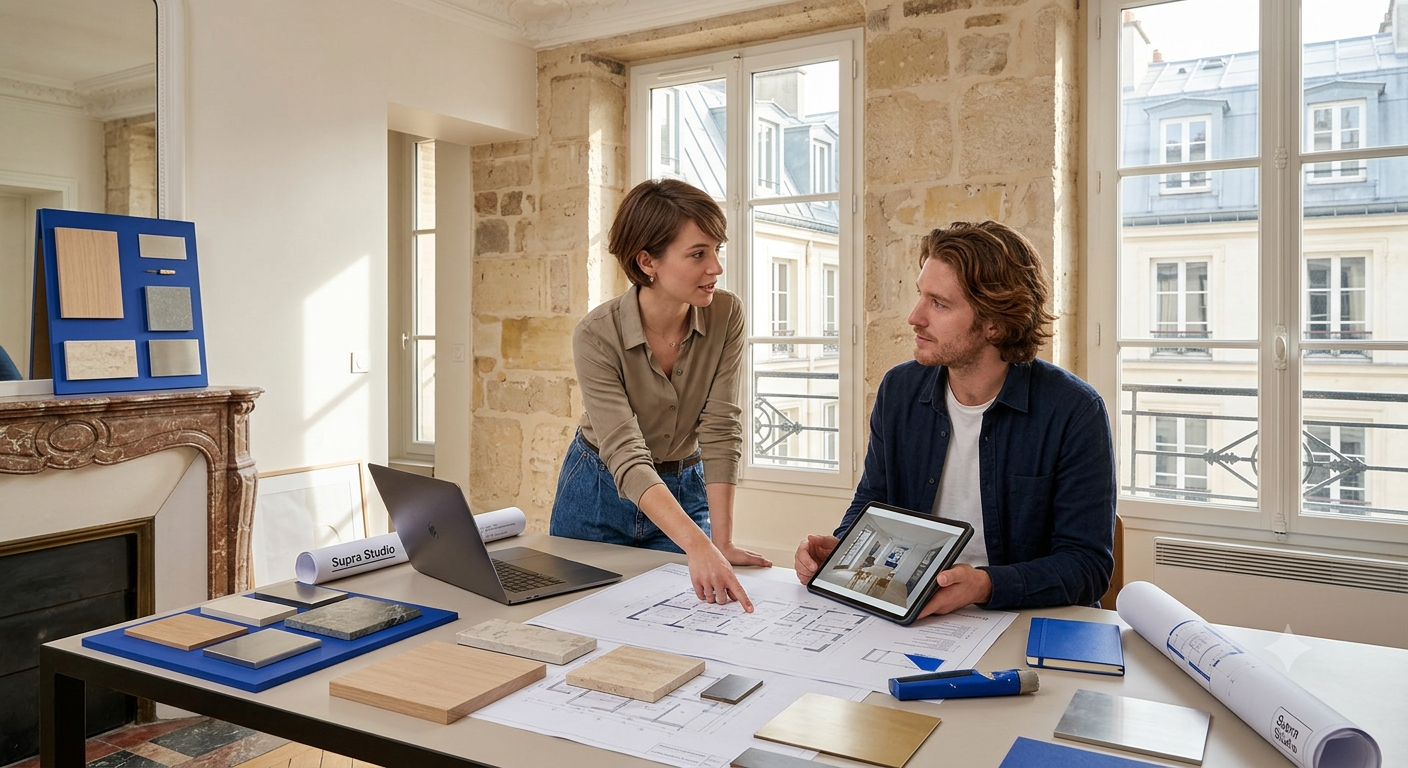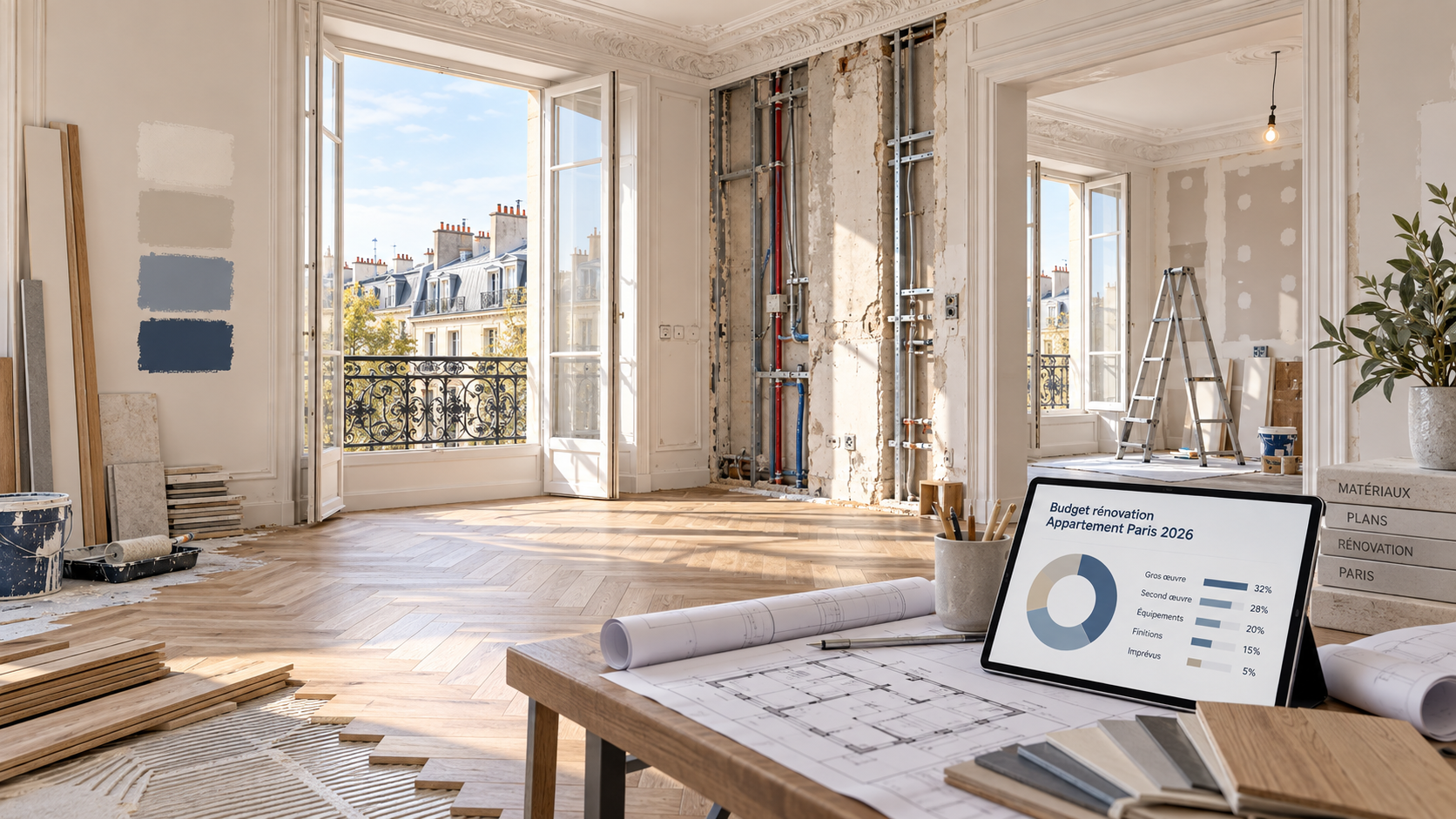

Most searches start the same way: hours spent collecting images, following accounts, saving interiors that appeal without always knowing why. That's a natural, even necessary step. But it feeds a common confusion: choosing an interior architect based solely on what they've already produced, as if picking a style from a catalogue. At Supra Studio, we believe this approach misses the point entirely — and sets you up for a common disappointment once the project is underway: an aesthetically successful interior that doesn't actually resemble the people living in it.
What's really at stake behind an interior project
An apartment isn't simply an assembly of tastefully chosen materials and colours. It's a response to a way of living: how you entertain, how you work from home, how you move through the space in a morning rush, how much quiet you need in the evening. Two people who share exactly the same aesthetic references — the same tones, the same furniture, the same materials — can need two radically different projects, simply because their relationship to space, light or privacy isn't the same.
This is why the first question to ask when meeting an architect isn't "do I like what they do?", but "are they trying to understand how I live, before drawing anything at all?". That distinction changes everything that follows.
Between technical mastery and genuine listening
The interior architecture profession combines two skills rarely found at the same level in the same person: a sharp technical and spatial understanding — structure, light, circulation, volumes, the constraints of the existing building — and a capacity for listening fine enough to translate a client's needs, sometimes poorly articulated, into design decisions.
A good architect doesn't just optimise a floor plan. They observe how you describe your daily life, pick up on what you don't say explicitly but your habits reveal, and turn that material into concrete decisions: where to place a partition, how to organise circulation, which room deserves the best light of the day. This dual skill — technical and human — is precisely what sets a truly designed project apart from one that has simply been decorated.
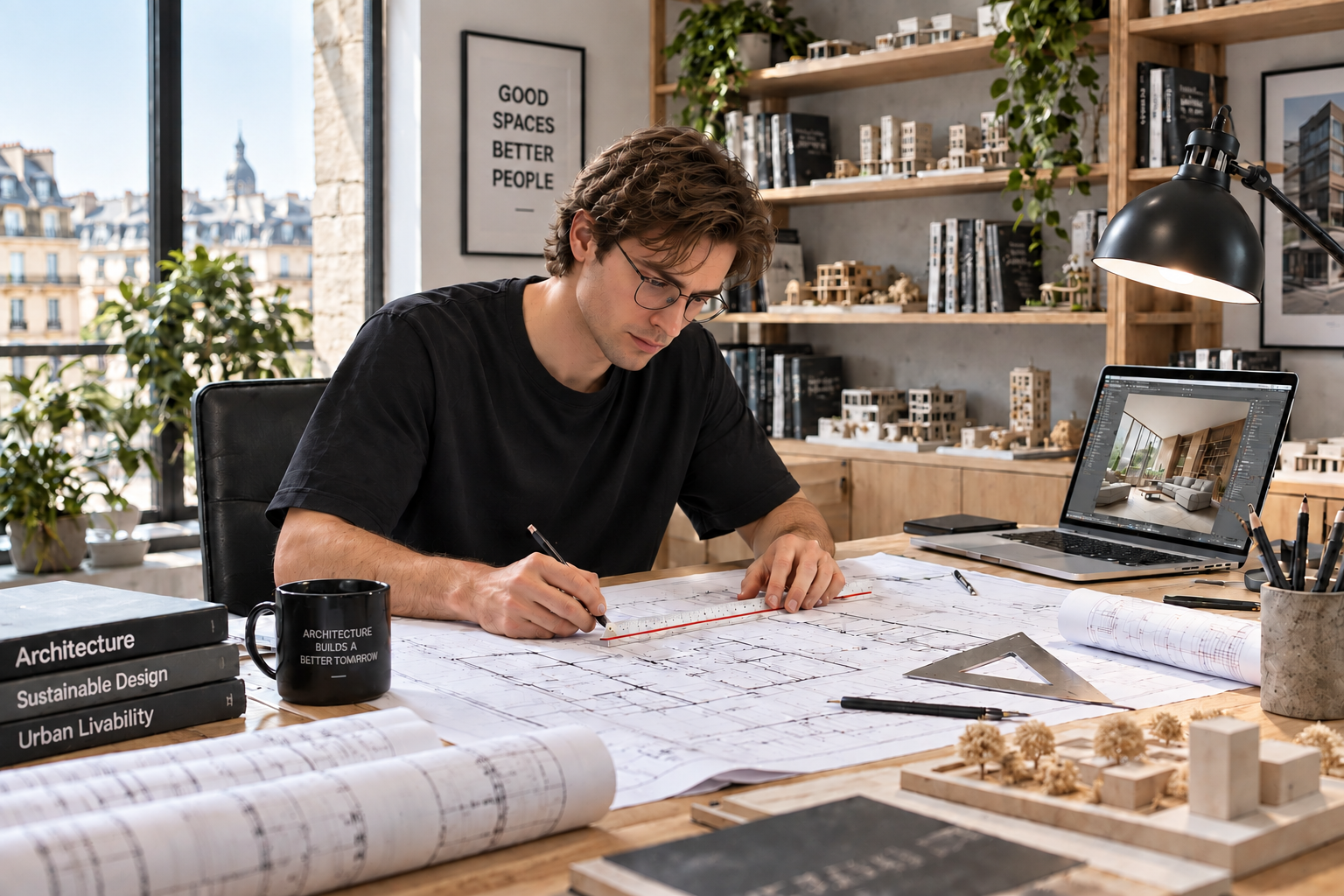
Designing a space that works, before thinking about aesthetics
A successful interior isn't judged on its photograph alone. It's judged by how it's used, over time: does the kitchen stay practical on a busy weeknight? Does the bedroom stay restful despite street noise? Does the home office remain functional six months after moving in, once the excitement of novelty has worn off?
This is where the real role of the interior architect lies: beyond aesthetics, they design a space that works. "Pretty" is a consequence of that work, never its starting point. An interior can be spectacular in a photo and yet uncomfortable to live in; conversely, a rigorously designed interior provides a quiet comfort that isn't always immediately obvious, but is felt every single day.
Turning your home's constraints into genuine assets
An older Parisian apartment, poorly laid out, with awkward volumes or limited floor space, is often seen by its owner as a string of problems to solve: a room that's too small, a corridor that eats up space, a layout that has seemed fixed for decades.
This is exactly where the value of a good architect comes in: where you see only a constraint, they see a design opportunity. A wall seen as a nuisance can become the starting point for rethinking an entire circulation. A windowless room can become a space worth living in, thanks to a clever use of indirect light. This ability to turn a difficulty into a design decision is one of the most reliable signs of an experienced professional — and one of the hardest things to assess from a simple portfolio.
The signs of genuinely sound reasoning
If there is one single selection criterion to remember, it is this: judge how an architect reasons, not only what they visually produce. During a first meeting, certain signs don't lie: they ask questions about your daily life before talking about style or materials; they explain the why behind a proposal, not just how it will be built; they are able to challenge an idea you had in mind, explaining their reasoning rather than simply executing it without question; and they clearly distinguish, in how they speak, between their own personal taste and your actual use of the space.
A portfolio of past work is useful for assessing a general sensibility, a quality of execution, a consistency of approach. But it should never be the only selection criterion: an interior you don't find "to your taste" in a photo may well have been designed with impeccable reasoning, for a client whose needs simply weren't yours.
Revealing an identity rather than reproducing a trend
Trends pass. An interior designed purely to fit the aesthetic of the moment ages badly, precisely because it was never designed for the people living in it, but for an era. Conversely, an interior designed from genuine listening — to your habits, your history, your way of inhabiting a place — stands the test of time, because it never tried to follow a trend: it tried to reveal an identity.
That's the whole point of choosing your interior architect well: not looking for someone who will reproduce a style you spotted elsewhere, but someone capable of taking ownership of your ideas, structuring them, and bringing them to life with their expertise. The architect isn't there to impose their own signature at all costs; they're there to give shape, with skill and rigour, to who you really are.
Supra Studio's approach
At Supra Studio, every project begins with a conversation, long before the first sketch. Understanding how you live, what weighs on you in your current home, what you absolutely don't want to give up: this listening phase shapes every decision that follows. Our role isn't to offer you a signature style of our own, duplicated from one project to the next, but to design, from your identity and the real constraints of your property, an interior that genuinely reflects who you are, for years to come.
Planning a renovation or fit-out project in Paris? Book an appointment for an initial conversation, or get in touch to discuss your project.
Frequently asked questions
How do I know if an interior architect is right for me, beyond their portfolio? Watch how they ask questions during the first meeting: do they first take an interest in your lifestyle, or do they jump straight to aesthetic choices? A good architect clearly distinguishes their own personal preferences from your actual use of the space.
Should I choose an architect whose style exactly matches my taste? Not necessarily. A skilled architect is able to adapt their reasoning and sensibility to very different clients. The deciding factor is their capacity to listen and the rigour of their design thinking, far more than any stylistic resemblance to their previous projects.
Why can an architect see opportunities where I only see constraints? Because their training and experience let them reason in terms of volumes, light and circulation, beyond the existing layout. An apparent constraint — a wall, a poorly lit room — then becomes a starting point for design rather than an obstacle.
What's the difference between a "trendy" interior and one designed to last? A trendy interior reflects the aesthetic of the moment, which fades with time. An interior designed from genuine listening to the client reflects a distinct identity, which stays relevant and enjoyable to live in regardless of trends. For a concrete look at how we build this listening process before any costing, see our article on interior architect fees in Paris.